Is Astrology Accurate
Have you ever wondered whether astrology is accurate or simply a waste of time?
If so, you’re not alone.
Astrology has been debated, criticized, and misunderstood for centuries. Some people view it as a valuable tool for self-discovery, while others dismiss it entirely. Many religious authorities have frowned upon astrology throughout history, and questions often arise about whether astrology is simply fortune-telling, fantasy, or something more.
So let’s explore what is always accurate in astrology—and what is not.
The Foundation of Astrology Is Astronomy
As a trained specialized Medical Technologist, I naturally approach things from both a scientific and observational perspective.
If you step outside tonight and look at the sky, you’ll see celestial bodies positioned in a specific arrangement. Each planet follows its own orbital path, travels at its own speed, and completes its own cycle. These movements are measurable, predictable, and precise.
That is the realm of astronomy.
The positions of the Sun, Moon, planets, and other celestial bodies are not matters of opinion. They are facts that can be calculated with remarkable accuracy.
Organizations such as NASA’s Jet Propulsion Laboratory (JPL) track planetary positions with extraordinary precision. Professional astrology software uses this astronomical data to calculate charts.
In other words, astrologers do not “make up” where the planets are. The planetary positions themselves are accurate.
What Is a Natal Chart?
An astrology chart is simply a symbolic snapshot of the sky at a particular moment in time.
A natal chart, also called a birth chart, is a snapshot of the heavens at the moment of your first breath.
When the correct birth information is entered into reliable software, the chart accurately shows:
- The positions of the planets
- The zodiac signs
- The house divisions
- The angles
- Various abstract points used in astrology
The chart itself is mathematics and astronomy.
The most common errors occur when incorrect birth information is entered, especially an inaccurate birth time. Even small errors can affect the Ascendant and other important chart factors.
What Is 100% Accurate?
The astronomical positions shown in a correctly calculated chart are accurate.
If Venus is at 25 degrees Cancer, Venus is at 25 degrees Cancer.
If Jupiter is at 25 degrees Cancer, Jupiter is at 25 degrees Cancer.
There is no debate about those positions.
The chart is a precise map of where celestial bodies were located at a specific moment in time.
Where Interpretation Enters the Picture
The interpretation of a chart is where astrology becomes more subjective.
An astrologer studies the planetary placements, signs, houses, and relationships between the planets—what astrologers call aspects—and then interprets their meaning.
Think of the planets and points in a chart as characters in a story. The chart shows who is present and where they are located. The astrologer’s job is to understand the relationships, themes, and symbolism represented by those placements.
Different astrologers may describe the same chart differently, just as two art critics may interpret the same painting in unique ways.
The chart itself is objective.
The interpretation is where human experience, training, intuition, and perspective come into play.
A Simple Way to Test Astrology for Yourself
One of the best ways to understand this concept is through regular stargazing.
Right now, something beautiful is happening in our evening sky.
If you look toward the western horizon after sunset, you’ll notice two brilliant lights drawing closer together each night. Those lights are Venus and Jupiter.
At the time of this writing, Venus is moving through Cancer and is approaching Jupiter. Since Venus travels faster than Jupiter, Venus appears to be catching up and moving toward Jupiter from our perspective on Earth.
I’ve been watching this approach since the beginning of June. Night after night, Venus has steadily moved closer.
Weather permitting, you’ll be able to witness the moment when the two appear to embrace in the sky, shining almost like a single brilliant light.
Then, as always, Venus will continue on her journey and move beyond Jupiter.
This isn’t a matter of belief.
It’s observable.
You can literally step outside and watch it happen.
That, in many ways, is the bridge between astronomy and astrology. Astrology begins with real celestial movements that anyone can observe.
A Moment of Wonder
Whether you study astrology or not, I encourage you to spend a few minutes looking up at the night sky.
Notice the order.
Notice the precision.
Notice the vastness.
For thousands of years, people have looked upward and felt awe at the intelligence and beauty of the cosmos.
Stargazing reminds us that we are part of something much larger than ourselves.
Final Thoughts
To recap:
The astronomical data used in astrology is precise and measurable.
The planetary positions in a correctly calculated chart are accurate.
The interpretation of those positions is where skill, experience, symbolism, and perspective enter the picture.
You don’t have to take my word for it. Look up. Observe the sky. Watch Venus and Jupiter for yourself. The heavens are offering a beautiful demonstration of celestial motion right now.
Thank you for taking the time to explore another aspect of metaphysics with me. I publish new educational articles regularly to help make astrology, metaphysics, and spiritual development easier to understand.
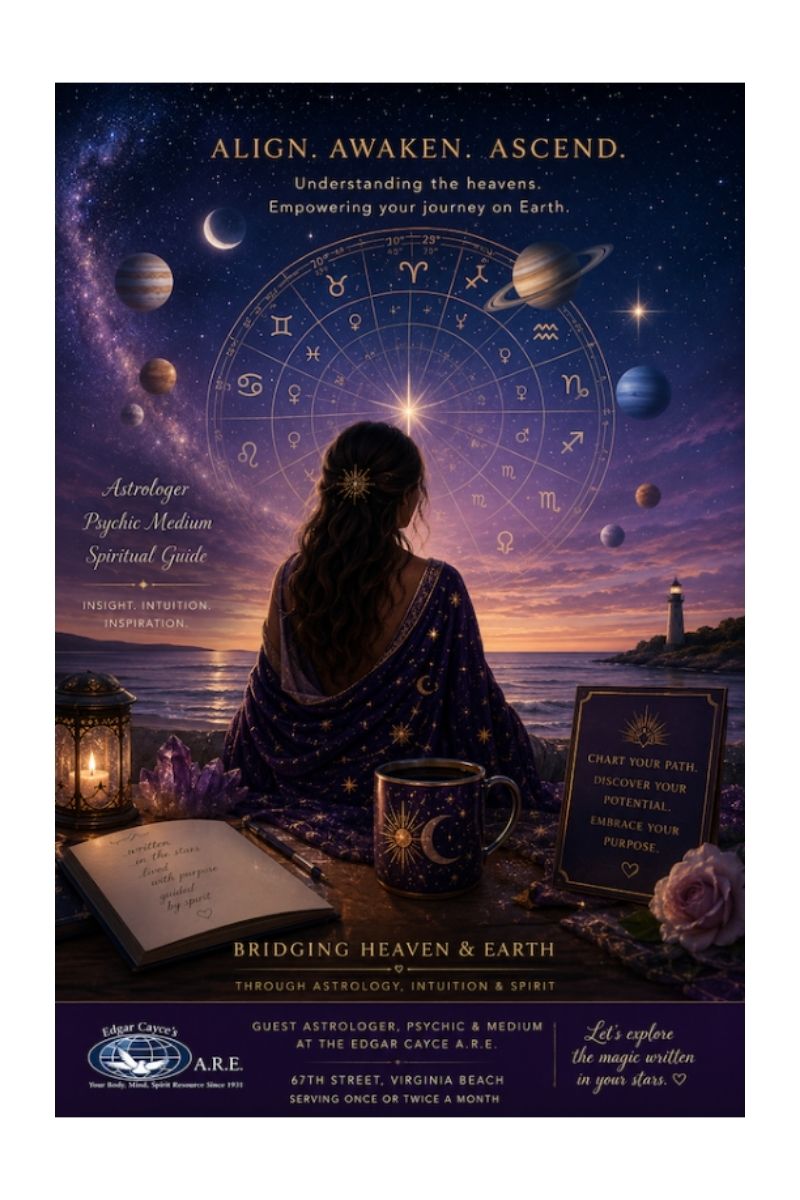
I also serve as a guest Astrologer, Psychic, and Medium at the Edgar Cayce A.R.E. in Virginia Beach, where I enjoy helping people explore their life path, purpose, and spiritual growth through astrology and intuitive guidance.
If you found this article helpful, please share it with a friend or family member who has ever wondered whether astrology is fact, fiction, or something in between. The more we encourage thoughtful exploration, the more we expand understanding.